Wednesday, June 29, 2016

Repairing the Word


One of the richest principles of Jewish ethics is a concept called tikkun olam, which loosely translates to "repairing the world." People know it best from the Aleinu, a prayer Orthodox Jews recite three times daily. The prayer Aleinu (“It is our duty to praise”) is the closing prayer of the morning, afternoon and evening service. It consists of two prayers, Aleinu and V’al Kein. Some believe Tanna Rav in the third century AD in Babylonia wrote Aleinu for Rosh Hashanah services. Rav was the first to institute the Aleinu into the service.  The full citation is l'takken olam b'malkhut Shaddai, often translated, "to perfect the world under God's sovereignty." Here is the immediate context of the prayer. 

Therefore we put our hope in You, Adonai our God,
to soon see the glory of
Your strength, to remove all idols from the Earth,
and to completely cut off
all false gods; to repair the world, Your holy
empire.

Without the full context, one could assume tikkun olam is something we endeavor to do on our own, as though we were some sort of cosmic carpenter, well-stocked toolbelt buckled around our waist, as we endeavor to smooth out the rough spots on the planet. In fact -- as the words of the Aleinu make clear -- faithful Jews view all their good works as being carried out under the oversight and in the name of a loving God. They are not solo operators, but rather numberless laborers on the divine work crew, with the Lord as construction manager. God will repair the world through the faithful response of the people of God.

It is no different for Christians.

Goody-two-shoes, Do-gooders, and all that


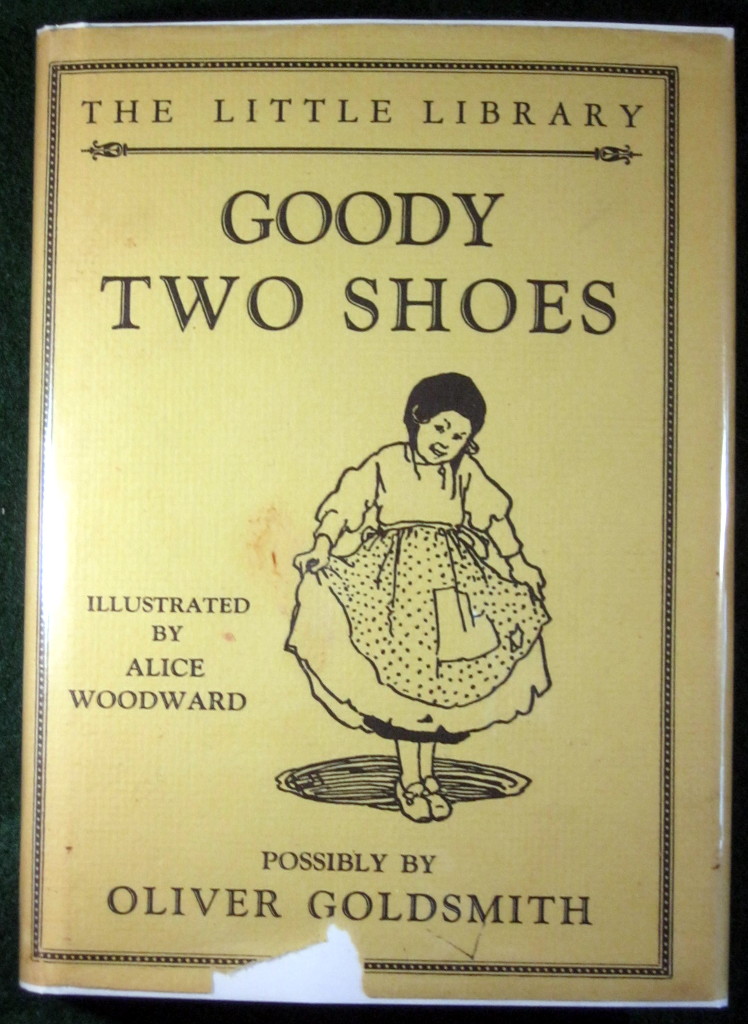
Has anyone ever called you a "goody two-shoes?" It is usually not a compliment, given that the reason someone receives the title is that someone is so good so as to be annoying to regular, imperfect people. I often wonder from where we get such expressions. It turns out it comes from a 1765 children's book. It was about a poor, orphan girl named Margery Meanwell (she means well, get it?) who walks around forlornly with only one shoe until a wealthy benefactor gives her a new pair of shoes, after which she runs around town knocking on doors and telling everyone she can find that she now has "two shoes." See? Annoying.

Of course, there are other variations on being a goody two-shoes. You can be a "do-gooder," which conjures up images of the old cartoon Canadian Mountie Dudley Do-Right, or you can be a "goody-goody," which sounds like something that fell from an ice cream truck.

Paul advises that followers of Jesus not grow weary in doing good. We will reap the fruit of such persistence in doing good, if we do not give up. He also says that we are to do good to everyone, whether they follow Jesus or not. You can read this in Galatians 6:9-10.

Comedian Jeff Foxworthy and host of the cancelled television quiz show "Are You Smarter than a Fifth-Grader?," is well known for his "You might be a redneck" one-liners. Think about how people might complete the sentence, "You might be a Christian if ..."

How would a Christian respond? What is a biblical response to this sentence?

You might be a Christian if you love God with your heart, mind, soul, and strength, and love your neighbor as yourself.

You might be a Christian if you see by faith that God was in Christ reconciling the world to God.

You might be a Christian if you ponder the deeper meaning of the Ten Commandments.

You might be a Christian if you are growing in your faith, hope, and love.

You might be a Christian if you are growing the fruit of the Spirit, such as love, joy, peace, patience, kindness, generosity, faithfulness, self-control.

You might be a Christian if you persist in doing good to people, whether they deserve it or not.

You might be a Christian if you are engaged in ministry through the spiritual gifts God has given you.

You might be a Christian if you identify with the Body of Christ and if Christ is taking shape in you.

How might a non-believer respond? David Kinnaman’s book, Unchristian (2008) might suggest the following.

"You might be a Christian if you are against everything."

You might be a Christian if you are hypocritical.

You might be a Christian if tell everyone to “get saved.”

You might be a Christian if you are anti-homosexual.

You might be a Christian if you lead a sheltered life.

You might be a Christian if you are too political.

You might be a Christian if you are judgmental.

Mugwumps and other Do-Gooders


In the 1890s, “goo-goo” was a term used as shorthand for the members of the "Good Government Clubs" that rose up in opposition to the political "machines" that dominated the governments of many cities and states at the time (and, in many places, still do). Their opponents gave them the name. The City Club of New York City sponsored “Good Government Clubs” in every assembly district. Their efforts led to the election of a reform mayor in 1894, a setback for the political machine known as Tammany Hall. Mugwumps and Progressives also received the label “goo-goo.” The term is a mildly derisive label for high-mind citizens or reformers. The term goo-goo still has political currency. It has changed little in meaning since critics first used it in the late 19th century.

The presidential campaign of 1884 was between Democrat Grover Cleveland and Republican James G. Blaine. It made the goo-goos prominent. The reason was that the Democrat here made quite a name for himself by opposing on the political machines of the time, Tammany Hall. This endeared him to the mugwumps, a name their critics gave to them. Blaine had many enemies within the Republican Party, including the mugwumps. Their opposition called them “mugwumps.” Cartoons showed them with their face one side of the fence and their “wump” on the other side of the fence. They tried to be somewhat independent in a time when partisanship demanded that you be one side of the political divide or the other.  

Several historians of the 1960s and 1970s portrayed the Mugwumps as members of an insecure elite, one that felt threatened by changes in American society. These historians often focused on the social background and status of their subjects, and the narratives they have written share a common outlook. Mugwumps tended to come from old Protestant families of New York and New England, and often from inherited wealth. They belonged to or identified with the emerging business and professional elite, and were often members of the most exclusive clubs. Yet they felt threatened by the rise of machine politics, one aspect of which was the spoils system and by the rising power of immigrants in American society. They excelled as authors and essayists, yet their writings indicated their social position and class loyalties. In politics, they tended to be ineffectual and unsuccessful, unable and unwilling to operate effectively in a political environment where patronage was the norm.

From another perspective, however, "Machine politics" is another way of describing a political entity led by an individual or small group that maintains control over a city through a hierarchical system of patronage, rewards and punishments. The machine is more interested in benefiting itself than the public. Think of it as a kind of legal, political mafia, if you will.

In a more recent work, historian David Tucker (1998) attempts to rehabilitate the Mugwumps. According to Tucker, the Mugwumps embodied the liberalism of the 19th century, and their rejection by 20th-century historians, who embraced the government intervention of the New Deal and the Great Society, is not surprising. To Tucker, their eloquent writings speak for themselves, and are testament to a high-minded civic morality.

The "goo-goos" challenged the political machines through a series of reform movements driven by idealism and a desire for change. They were annoying with a good reason, and some politicians who try to go against the system today still retain the label. Being a "goo-goo" can be a very good thing because it turns the focus from what is expedient and self-serving to what is right and what benefits everyone.

Charles Francis Adams, Jr., president of the Union Pacific Railroad and the American Historical Association
Henry Adams, author
Edward Atkinson, entrepreneur and business executive
Louis Brandeis, future Supreme Court Justice
Charles William Eliot, President of Harvard University
Josiah Willard Gibbs, professor of mathematical physics at Yale University
E. L. Godkin, editor of The Nation
Seth Low, Republican mayor of Brooklyn NY in 1884; lost his party's support due to his backing Cleveland, and stepped down rather than attempting to run for a third term in 1885
Thomas Nast, political cartoonist
Carl Schurz, former Senator from Missouri and Secretary of the Interior, editor of the Saturday Evening Post
Moorfield Storey, lawyer and NAACP president from 1909 to 1915
William Graham Sumner, social scientist, Yale University
Mark Twain, author, self-identified as a Mugwump in his essay, Christian Science
Horace White, editor of the Chicago Tribune

Do Sweat the Small Stuff?


A doctor who did delicate procedures on the hearts of infants had tremendous success – until he had a stretch in which several babies died after apparently successful surgeries. He and a colleague puzzled about this after a surgery. Both liked NASCAR, so they turned on a race. In that context, they saw the speed and precision of the pit crew in a new light. You see, one of the most dangerous times in any surgery is in the hand-off from surgery to ICU. At that time, you unhook and re-hook machines and tubes properly. Goldman and Elliott began to look at every detail of the handoff procedure, coming up with a seven- page manual of processes and drilling team members on their responsibilities. Dr. de Leval got some other surgeons involved in looking at the problem and commissioned a study that confirmed his theory. The study, published in the Journal of Thoracic and Cardiovascular Surgery, determined that, of course, big mistakes cause big problems. However, more often the small, unnoticed and uncorrected mistakes by medical teams add up and correlate strongly to bad outcomes for patients. The pediatric ICU chief at Great Ormond Street, Dr. Goldman, concurred. “Our handoffs were haphazard,” he says. The result of the improvements was that technical errors fell 42percent and information errors fell 49percent over a two-year period.

The bottom line? Everything matters, maybe especially the little things. Joseph A. Michelli also reminded of me this recently as I read his The Starbucks Experience. He details how Starbucks has paid attention to every part of their process and stores. In a similar vein, some of you might remember a wonderful little book called “Don’t Sweat the Small Stuff.” It has wonderful advice for keeping things in our lives in perspective. Like all wisdom, however, in a different context it will fail. Thus, in some circumstances, it pays to sweat the small stuff, whether you are in the last lap of a Grand Prix, developing a successful business, or in the final stages of surgery on a 3-year-old heart. It is all about the process, all about the team, all about everyone knowing their responsibility and executing with precision.

In the church, we must not forget small things like dealing gently with each other in our missteps, sharing the burdens of each other, remembering we reap what we sow, and doing what is right. I am sure you can think of others. Such qualities are important in family, with friends, and in the church. In our most intimate relationships, the small stuff matters.

Wednesday, June 22, 2016

Difficulty of Growing Fruit


I came across an article about fruit, especially the new shape of fruit that was just interesting to me.

Of course, fruit comes in many shapes and sizes. Some are spherical -- like oranges, blueberries and grapes. Others are oblong -- like mangoes and papayas. Still others are apple- or banana-shaped like ... apples and bananas.

 Some farmers, though, are challenging our assumptions about the shape of fruit.

Watermelons, for example, no longer need to be the rounded oblong shape with which we are most familiar. Go to the right market, and you may find square watermelons grown by botanical artists. At a restaurant, the cucumbers in your salad might appear heart-shaped rather than round, due to the produce shaping of another farmer.

While amazing, forming produce into basic shapes like squares and hearts is just the beginning.

One agricultural expert has developed a process where pears -- having long been pear-shaped -- can now arrive at your farmer's market in the shape of little Buddhas. They can shape the arms and facial features in such a well-defined way that the Buddha appears to be in a prayer-like, meditative state.

These fruits look like beautiful little sculptures or carvings, but people use no knives to create them. Farmers grow these pears this way.

To grow square watermelons and Buddha-shaped pears, farmers use specially designed molds they attach to the fruit when it first appears. As the young fruit matures, it grows into the mold, taking on the shape of the inside of the tool.

When the fruit is ripe, the farmer removes the mold. The fruit retains the shape of the mold, allowing the farmer to deliver a square watermelon, heart-shaped cucumber or Buddha-shaped pear to the market.

With or without the mold, producing fruit is no easy task. Because of our distance from the farm or orchard, many of us have lost our appreciation for just how difficult this process is. We simply go to the local grocery story and pick up whatever fruit we like, at a reasonable price. It is all right there before us and we can receive it instantly.

If you are acquainted with your New Testament, you have probably read the passage in the letter of Paul to the Galatians about the fruit of the Spirit in Chapter 5. Of course, there is no market where we can acquire the fruit of the Spirit -- love, joy, peace, patience, kindness, generosity, faithfulness, gentleness and self-control. Instead, we need to become orchard keepers, cultivating these virtues within us.

Apologetics of Virtue


From my knowledge of history, it seems as if the public promotion of atheism goes in spurts. It will be quite “in” to say you are an atheist. Over the past few years, that has been the case. Especially since 9/11, atheism has seemed like an attractive option.  

• Richard Dawkins The God Delusion has sold 8.5 million copies, spending a year on the New York Times Best Seller List.
• Christopher Hitchens’ God Is Not Great became a number-one New York Times Best Seller.
• Bill Maher’s film Religulous was the highest-grossing documentary of 2008. 

            New Atheism is hot right now … and lucrative. It lumps every religion together. Further, the “atheist” rarely looks seriously at the harm done by secular forces in this world, such as communism, fascism, and other ideologies. They do not call for the abandonment of politics or political ideology because of their misuse, but they are sure are willing to do so with religion.

            Newsweek named Rabbi David Wolpe’s “#1 Pulpit Rabbi in America.” Wolpe’s book Why Faith Matters is his response to the new atheism movement. Quite honestly, here is a book I wish I had written. He is not bombastic with his opponents. He has debated some of them and has a good relationship with them. However, he thinks their discussion of religion has completely missed the positive benefits of religion. The book is decidedly not a “philosophical” defense of “religion.” Rather, he writes about how God, or belief in God, changes the lives of people. He cites the apologetic power of religion’s gifts to society: interdependent community, a sense of social responsibility, a commitment to charity, believing in God.

            One way to think of this approach is as an apologetic of virtue. The word “apologetic” does not refer to the need to apologize. Theologians can provide an “apologetic” for the Christian faith, meaning a defense of the faith. A “virtue apologetic” suggests that the strongest argument for Christianity is other Christians. Christians as individuals and gathered into communities are to be signs of the redemption God is bringing to this world in Christ. We are often a weak sign. Our light flickers and dims due to our mistakes, sins, and copying of the values of the culture. Yet, we as individuals and communities of faith have the power to be (rather than make) a strong argument for the Christian faith.

            The virtue apologetic crystallized for Wolpe early in his ministry career. In a story of inadequacy relatable to many clergy, he tells of being called to the hospital bedside of an elderly woman to offer final prayers for the dying. He took her comatose hand but felt like a fraud. Who was he to shepherd a soul to the edge of the next world? Dutifully, he proceeded to pray familiar words anyway, letting their power carry him. Talking to his wife about it afterward, Wolpe confessed his feelings of inadequacy. “You’re right,” she said. “You’re unworthy. Anyone would be unworthy doing such a thing. That’s okay, though. It’s not you doing it. It’s being done through you.” Wolpe writes, “That was a pivotal moment for me. Suddenly it became clear to me that we bring light into this world not as a source but as a prism — it comes through us. As electricity requires a conduit, so spirit moves through human beings to touch others in crucial moments. As soon as I stepped out of my own way, the prayer felt real. I could believe in blessing when I felt that it did not depend on me.”

            Novelist Edith Wharton, in her poem “Vesalius In Zante,” put the same idea this way:  

So knowledge come, no matter how it comes!
No matter whence the light falls, so it fall!
Truth's way, not mine--that I, whose service failed
In action, yet may make amends in praise.
Fabricius, Cesalpinus, say your word,
Not yours, or mine, but Truth's, as you receive it!
You miss a point I saw? See others, then!
Misread my meaning? Yet expound your own!
Obscure one space I cleared? The sky is wide,
And you may yet uncover other stars.
For thus I read the meaning of this end:
There are two ways of spreading light: to be
The candle or the mirror that reflects it.
I let my wick burn out--there yet remains
To spread an answering surface to the flame
That others kindle. 

Turn me in my bed.
The window darkens as the hours swing round;
But yonder, look, the other casement glows!
Let me face westward as my sun goes down.

Sunday, June 19, 2016

Father's Day 2016 Reflection


Being a good dad does not come easily. It is messy, tiring, and it tests you. We live in a time when the culture implies the unimportance of dad. Fathers are not perfect, and that is okay. Show up, be strong, and be the father your family needs.

Being the kind of dad whose kids will one day remember him with fondness and joy is hard work. After all, if Shakespeare is right, 

The evil that men do lives after them;
The good is oft interred with their bones;
Julius Caesar, Act 3, Scene 2, 1620 

Being the kind of dad who, although being far from perfect, still manages to love and lead his children well is no easy task.

            We have all heard or experienced “over-bearing” fathers. Maybe we need some “under-bearing” fathers. Children need fathers who are behind, beside, beneath, and going before them. Fathers need to bear up their children in a way that offers support and encouragement. They lead by example. Under-bearing fathers parent more by who they are and how they relate to their children than they do by anything else.

            If you are a Christian parent, one concern ought to be how one can make Christ the center of the home. Each family may answer that question differently, but here are some general characteristics:

1.         Joy—Every family will encounter trials and hardships, but there is no circumstance that can rob us of our joy if we know that the key to our present welfare and future destiny lies in Christ alone.         

  2.       Orderliness—As the apostle Paul says, "God is not the author of confusion but of peace" (I Corinthians 14:33).                                      

3.         Grace—A Christian home should be a safe place to mess up. Family members need to be reminded that love, not perfection, is the goal.                               

4.         Service—A Christian home is tempered and flavored with acts of kindness, respect, humility and love.                                

5.         Spiritual Disciplines—A Christ-centered home provides an environment in which every member of the family learns how to live by studying Scripture, praying and spending time in God's presence.                   
6.         God's Purposes—A Christian home is a place where the family's goals are founded upon His values and the vision for the future is consistent with His plan.